
The end of summer often brings mixed feelings. Children may be excited to see friends again while also feeling unsure about earlier mornings, a new teacher, an unfamiliar classroom, or a busier daily rhythm.
Parents can feel the pressure too. There are supplies to organize, schedules to remember, clothes to prepare, and a long list of things that seem as though they should already be under control.
But a calmer return to school does not require a perfect routine. Instead of changing everything during the final weekend, families can use the last two weeks of the vacation to bring back a little structure at a time. The aim is simply to make the first school morning feel more familiar and manageable.
Moving from relaxed summer days to a school schedule involves many small transitions: waking earlier, getting dressed on time, eating breakfast, leaving the house, concentrating for longer periods, and managing belongings.
These tasks may look simple to adults, but they call on skills such as planning, remembering, focusing attention, and switching from one activity to another. These executive function skills continue to develop throughout childhood. Predictable routines and clear, manageable steps can give children useful support while they practise them.
A calm return to school is not about filling every day with preparation. It is about making a few important parts of the school routine feel familiar again.
If summer bedtimes have shifted later, the night before school is not the easiest time to correct the whole schedule. Begin moving bedtime and wake-up time gradually toward the school-day routine instead.
There is no single timetable that suits every family. Think about when your child needs to wake, how long the morning routine really takes, and how much sleep they need. Children ages 6–12 are generally advised to get 9–12 hours of sleep in each 24-hour period.
An evening routine can be simple: wash, put away screens, prepare a few things for morning, read together, or have a quiet conversation. Repeating a short sequence is often more useful than creating an elaborate bedtime plan that is difficult to maintain.
If one evening runs late, the plan has not failed. Simply return to the routine the next day.
A few days before school begins, try going through the school-morning routine in a calm, unhurried way. Notice how much time your child needs to get dressed, eat breakfast, gather their things, and be ready to leave.
Try the main parts of the routine:
The purpose is not to test or hurry your child. Treat the morning as a family experiment. Notice which parts take longer than expected and where small changes might help.
Perhaps the shoes need a permanent place near the door. Maybe the water bottle is easier to fill the night before. Perhaps the planned breakfast takes too long for a weekday. Finding these details early can reduce stress when the first real school morning arrives.
School preparation can easily become something adults do around a child. Giving children one or two age-appropriate responsibilities helps them take part without making the process overwhelming.
Depending on their age, they might:
The goal is not instant independence. A child may still need reminders and practical help. What matters is that starting school is not merely something happening to them; they have a manageable role in getting ready.
Children do not need to feel excited about every part of going back to school. They may look forward to friends and still worry about a new teacher. They may like learning and dislike busy mornings. Excitement and uncertainty can exist at the same time.
Instead of asking only, “Are you excited?”, try more specific questions:
If your child shares a worry, listen before offering a solution. Statements such as “There is nothing to worry about” are usually meant to reassure, but they can make a child feel unheard. A calmer response might be: “I can understand why that feels uncertain. Shall we think of one thing that could help?”
You do not have to solve every possible problem. Sometimes naming the worry and agreeing on one small next step is enough.

Familiar details can make an upcoming change feel less abstract. If it is practical for your family, you could walk or drive past the school, practise the route, look at the school website, or talk about what usually happens after arrival.
You might also:
Not every family can visit the school or receive classroom information in advance. These are possibilities, not requirements. Even a short conversation about a familiar friend, place, or routine can help.
Sometimes the most effective routine changes are changes to the surroundings. Children find tasks easier when the next step is visible and the things they need are easy to reach.
Consider creating:
Keep the system small. If a checklist contains fifteen steps and requires constant adult supervision, it may create more work than it saves. Begin with the two or three moments that cause the most difficulty, then add something only if the family genuinely needs it.
Preparation should support the end of summer, not take it over. Children still need time to play, rest, move, and enjoy the final days of the vacation.
There is no need to turn every afternoon into academic review or to organize the entire school year in advance. A short reading time, a practical preparation task, and a calm conversation can be enough for one day.
Try to protect at least some unstructured time. A child who begins the year rested and connected does not need to arrive having completed a perfect two-week program.
If you are starting about two weeks before school, the preparation can follow a gentle progression:
If you find this article only a few days before school, you have not missed your chance. Begin where you are. Choose the steps that would make the biggest difference for your family and leave the rest.
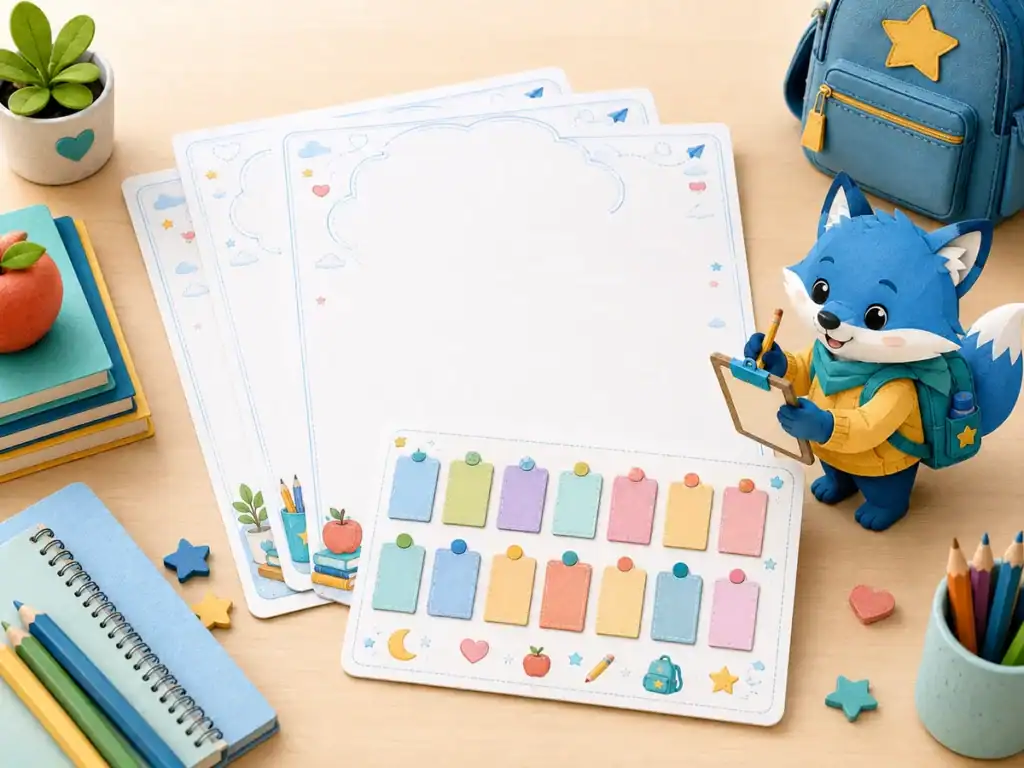
To make these small steps easier to follow, we created a free three-page 14-Day Back-to-School Countdown for families.
Each day includes:
Add your child’s first school day, print the countdown, and begin wherever it fits your family. It is a gentle guide, not another list you have to complete perfectly.
Some nervousness around the start of school is common. However, if your child’s worries are persistent or intense, or if they interfere with sleep, everyday activities, or school attendance, contact the school and consider asking a qualified health professional for support.
A printable routine can help with ordinary preparation, but it is not a substitute for individual professional care when a child is struggling.
The first school morning does not need to run flawlessly to be a good beginning. A packed bag by the door, a little more sleep, a familiar breakfast, and a few honest conversations may be enough to help your child step into the new school year with greater confidence.
Small steps count. Choose what helps your family, keep the plan flexible, and let the rest of summer still feel like summer.
Sources & Further Reading
Calm, playful printable learning activities
Digital printable resources. No physical item is shipped. Purchases are completed securely through Etsy. © 2026 BlueFoxLearn. All rights reserved.